
Role of Hair Texture – Elevating Luxury Styling Results

Finding your signature look starts with understanding the unique qualities of your hair. For women in La Jolla who crave personalized luxury, hair texture is more than a style—it’s a foundation for expert care and radiant results. Professional stylists know that every strand responds differently to products, treatments, and styling methods. This guide reveals how advanced insights into hair texture empower you to achieve stunning, healthy hair with tailored strategies designed just for you.
Table of Contents
- Defining Hair Texture and Its Importance
- Types of Hair Texture and Key Distinctions
- How Texture Influences Styling Techniques
- Product Selection Based on Hair Texture
- Risks and Missteps in Texture Management
Key Takeaways
| Point | Details |
|---|---|
| Understanding Hair Texture | Hair texture is a complex trait influenced by genetic factors, surface characteristics, and structural composition, impacting care strategies. |
| Four Primary Hair Types | The four main hair textures are straight, wavy, curly, and coily, each requiring specialized care and styling techniques. |
| Customized Product Selection | Selecting appropriate hair products is critical and should be based on individual hair texture and specific needs for optimal health and appearance. |
| Risks in Texture Management | Awareness of common risks like chemical overprocessing and heat damage is essential for maintaining hair integrity and preventing long-term issues. |
Defining Hair Texture and Its Importance
Hair texture represents a complex biological trait that determines the fundamental characteristics of individual hair strands. Microscopic features and structural properties profoundly influence how hair naturally appears, behaves, and responds to styling techniques. Understanding these intricate details becomes crucial for developing personalized hair care strategies that enhance both aesthetic and health outcomes.
The scientific foundation of hair texture revolves around several key characteristics:
- Genetic Determinants: Hair texture is predominantly influenced by genetic factors that control fiber shape, density, and mechanical properties
- Surface Characteristics: Includes aspects like surface friction, shine, and geometric variations
- Structural Composition: Consistent chemical makeup with nuanced microscopic differences
Professional stylists recognize that hair texture plays a critical role in determining appropriate treatment approaches. Each hair type requires unique care considerations, from moisture retention techniques to styling methodology. The variations can range from ultra-fine, pin-straight strands to densely coiled, voluminous textures.
Pro tip: Schedule a professional consultation to precisely analyze your unique hair texture and develop a customized care strategy.
Types of Hair Texture and Key Distinctions
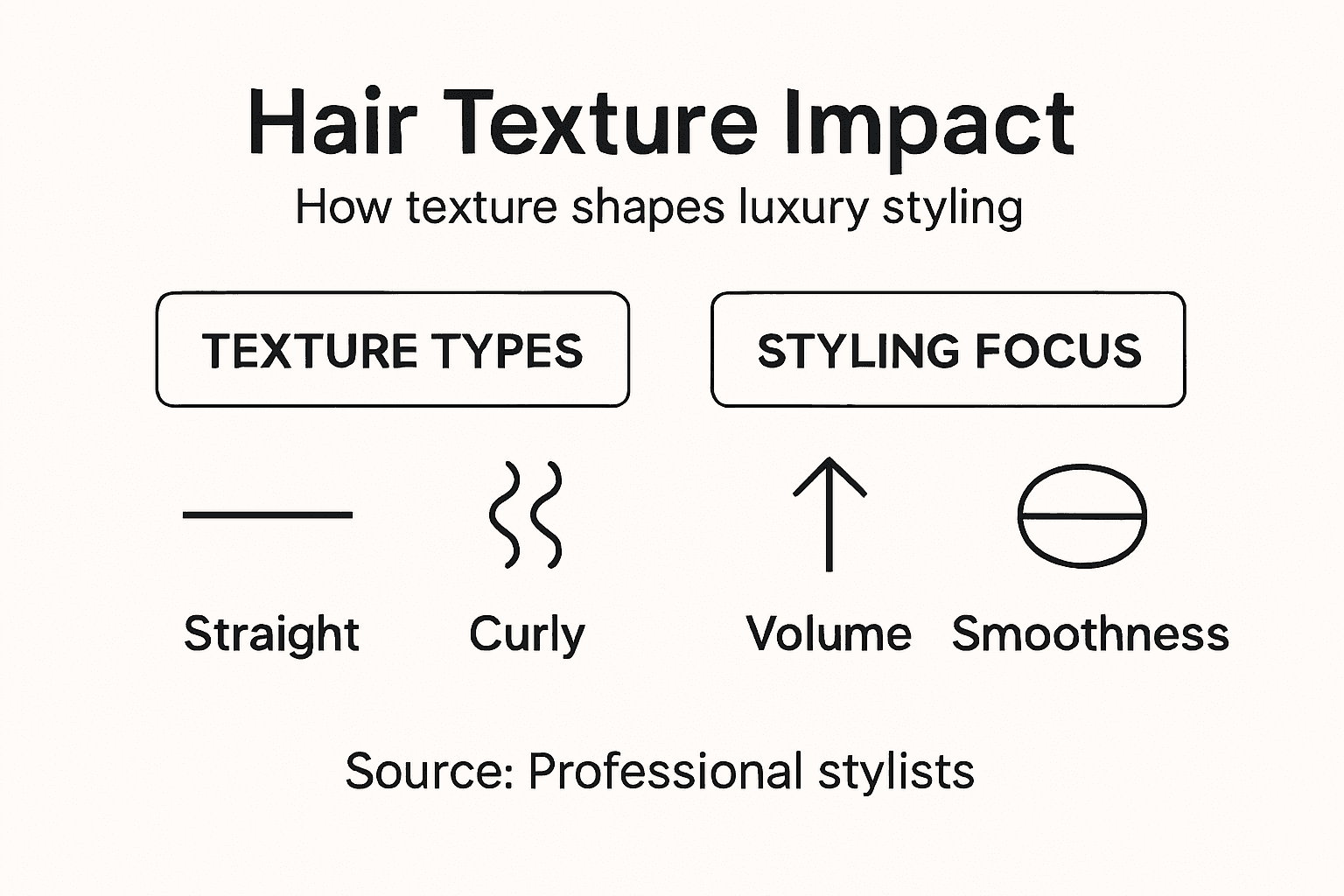
Multinational research reveals that hair texture is not a simple classification but a complex spectrum encompassing multiple distinctive characteristics. Professionals recognize four primary hair texture categories: straight, wavy, curly, and coily, each with unique structural and behavioral properties that significantly impact styling and care approaches.
The primary hair texture categories include:
- Straight Hair: Smooth, sleek strands with minimal natural wave or curl pattern
- Wavy Hair: Subtle S-shaped patterns with moderate volume and flexibility
- Curly Hair: Defined circular or spiral-shaped strands with pronounced texture
- Coily Hair: Tight, dense spiral patterns with significant volume and shrinkage potential
Ethnic hair research further highlights the anatomical differences across broad ethnic categories. These variations are not just superficial but involve fundamental differences in hair shaft structure, including the cuticle, cortex, and medulla. Understanding these nuanced differences becomes critical for developing targeted hair care strategies that respect individual hair characteristics.
Professional stylists recognize that each hair texture demands specialized treatment. Factors like moisture retention, styling techniques, and product selection must be carefully tailored to match the specific needs of an individual’s unique hair structure. This personalized approach ensures optimal hair health and aesthetic results.
Here is a concise comparison of the four primary hair texture types and their unique characteristics:
| Texture Type | Structural Features | Common Challenges | Best Professional Focus |
|---|---|---|---|
| Straight | Round fibers, smooth surface | Oiliness, lack of volume | Lightweight products, volumizing cuts |
| Wavy | S-shaped fibers, moderate thickness | Frizz, uneven curl patterns | Defined layering, anti-frizz solutions |
| Curly | Oval-shaped fibers, defined spirals | Dryness, shrinkage | Deep hydration, curl enhancement techniques |
| Coily | Flat/ribbon-like fibers, tight coils | Breakage, high shrinkage | Protective styles, intensive moisturization |
Pro tip: Consult a professional stylist who can perform a detailed hair texture analysis and recommend a precise, customized hair care regimen.
How Texture Influences Styling Techniques
Hair porosity research reveals that hair texture fundamentally determines how different styling techniques and products interact with individual hair strands. The mechanical properties and water permeability of hair fibers create unique challenges and opportunities for professional stylists seeking to create optimal styling results.
Key styling considerations for different hair textures include:
- Fine Hair: Requires lightweight products and gentle styling techniques
- Thick Hair: Demands more robust styling methods and deeper moisture treatments
- Curly Hair: Needs specialized hydration and techniques that minimize frizz
- Coarse Hair: Benefits from intensive conditioning and protective styling approaches
Professional cosmetology insights highlight that understanding hair texture goes beyond visual appearance. Stylists must consider multiple factors like strand thickness, elasticity, and moisture retention when developing personalized styling strategies. These nuanced approaches ensure that styling techniques enhance natural hair characteristics without causing damage.
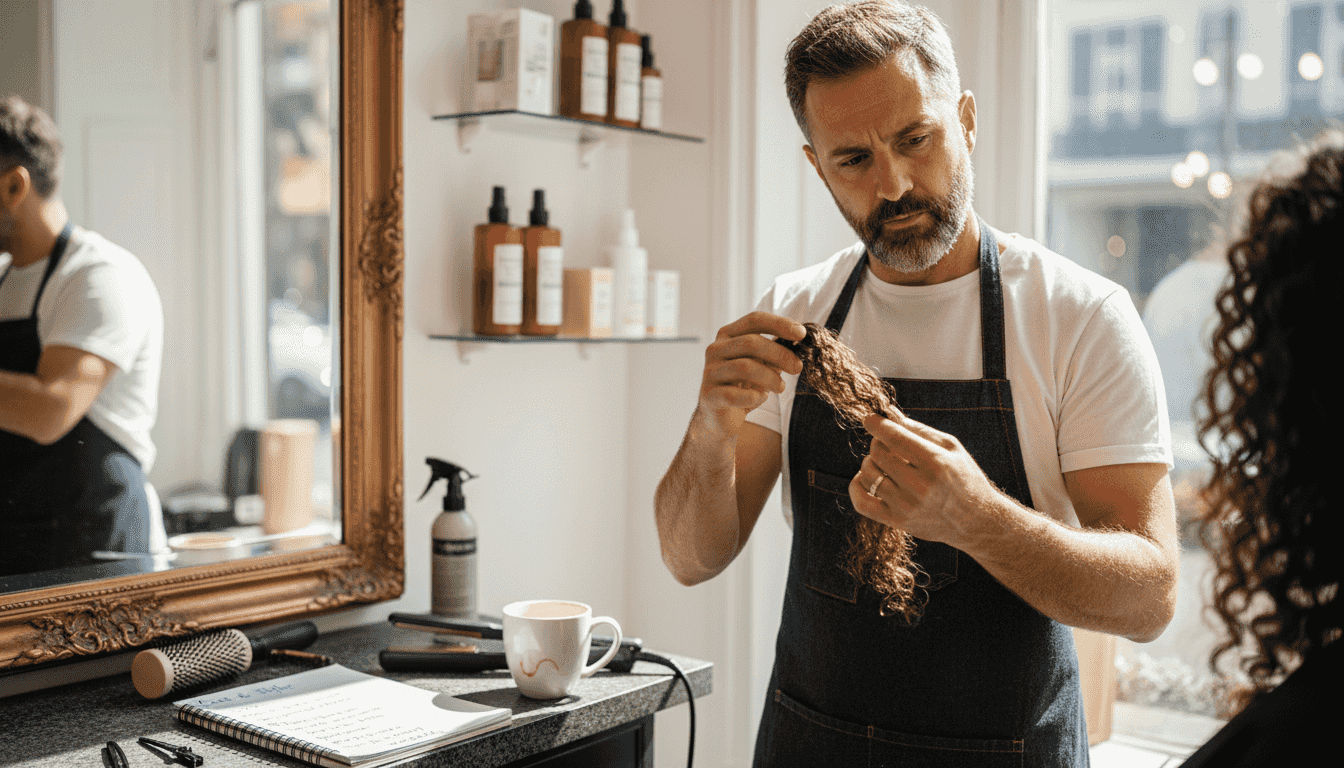
The interaction between hair texture and styling tools is particularly complex. Heat styling, chemical treatments, and mechanical manipulation can dramatically impact hair health, making it critical to choose techniques that complement rather than compromise natural hair structure. Professional stylists develop intricate knowledge of how different textures respond to various styling interventions, creating customized approaches that maximize both aesthetic appeal and hair integrity.
Pro tip: Always consult a professional stylist who can assess your specific hair texture and recommend precisely tailored styling techniques.
Product Selection Based on Hair Texture
Genomic hair research demonstrates that product selection is far more complex than a one-size-fits-all approach. The molecular structure and unique biomechanical properties of hair fibers require sophisticated, targeted product strategies that address specific textural characteristics and individual hair needs.
Product selection strategies for different hair textures include:
- Fine Hair: Lightweight, volumizing formulas that don’t weigh down strands
- Thick Hair: Rich, deeply moisturizing products with heavy-duty conditioning agents
- Curly Hair: Hydration-focused products with enhanced curl definition capabilities
- Coarse Hair: Intensive repair and protective formulations that combat dryness
Curly hair research emphasizes that effective product selection goes beyond basic categorization. Successful hair care involves understanding individual aesthetic goals, sensory preferences, and specific hair characteristics. This nuanced approach ensures that products not only improve hair appearance but also enhance overall hair health and user satisfaction.
Professional stylists recognize that product compatibility extends beyond surface-level characteristics. Molecular interactions between hair proteins and product ingredients determine long-term hair health, making precise product selection crucial. Factors like pH balance, protein content, and moisture retention capabilities must be carefully considered to develop a truly personalized hair care routine.
Pro tip: Schedule a professional consultation to perform a comprehensive hair texture analysis and receive precisely tailored product recommendations.
Risks and Missteps in Texture Management
Hair care research reveals that routine chemical and physical treatments can cause significant structural damage to hair, compromising its natural integrity and resilience. Textured hair is particularly vulnerable to inappropriate styling techniques and product applications that can dramatically reduce mechanical strength and moisture retention capabilities.
Common risks in texture management include:
- Chemical Overprocessing: Excessive chemical treatments that weaken hair structure
- Heat Damage: Repeated high-temperature styling causing permanent fiber breakdown
- Incorrect Product Use: Applying products incompatible with specific hair texture
- Mechanical Stress: Aggressive brushing or styling techniques that cause breakage
Scientific studies on hair health highlight the complex challenges in maintaining hair integrity. Chemical treatments frequently impair both hair fiber and scalp health, leading to increased dryness, brittleness, and potential scalp irritation. Understanding these risks becomes crucial for developing protective strategies that preserve hair’s natural characteristics.
Professional stylists emphasize that texture management requires a holistic approach. Each intervention—whether chemical, thermal, or mechanical—must be carefully evaluated for potential long-term consequences. The goal is to enhance hair’s natural beauty while minimizing structural damage, which demands precision, knowledge, and a deep understanding of individual hair characteristics.
Below is a summary of common risks in texture management and effective ways to prevent them:
| Risk Factor | Impact on Hair | Prevention Strategy |
|---|---|---|
| Chemical Overprocessing | Weakens hair structure | Limit use, deep conditioning treatments |
| Heat Damage | Irreversible fiber breakdown | Use heat protectants, lower temperatures |
| Product Mismatch | Increased dryness or oiliness | Choose texture-appropriate products |
| Mechanical Stress | Strand breakage, thinning | Gentle handling, protective hairstyles |
Pro tip: Consult a professional stylist before attempting any aggressive hair treatments to assess potential risks and develop a personalized, protective hair care strategy.
Elevate Your Hair Texture Experience with Expert Care
Understanding your unique hair texture is the first step toward achieving luxurious and healthy styling results. The article highlights the challenges of managing fine, curly, or coily hair textures, including moisture retention, product selection, and avoiding damage from heat or chemicals. At Joel C Ma Hair Studio, we specialize in personalized consultations that analyze your hair texture in detail to create tailored care and styling plans. Our skilled hair artists address common pain points such as frizz, dryness, and breakage while enhancing your hair’s natural beauty with expert precision.
Experience the confidence that comes from professional artistry combined with over 25 years of expertise in managing diverse hair textures and styles. Whether you desire a precision cut, balayage highlights, or protective styling, we ensure your hair’s health and vibrancy remain top priority. Booking a session with us means investing in customized treatments designed specifically for your hair’s unique structure.
Ready to transform your hair texture challenges into stunning results Visit Joel C Ma Hair Studio to schedule your personalized consultation today and discover the art of luxury hair care. Explore our Services and see how we can help you achieve flawless, healthy hair tailored to your lifestyle. Don’t wait to give your hair the expert attention it deserves—your best hair awaits at Joel C Ma Hair Studio.
Frequently Asked Questions
How does hair texture affect styling results?
Hair texture significantly influences how different styling techniques and products interact with hair strands. Understanding your hair texture helps in choosing appropriate styling methods to enhance natural beauty without causing damage.
What are the different types of hair textures?
The primary hair texture categories are straight, wavy, curly, and coily. Each type has distinct structural properties that affect moisture retention, styling techniques, and product selection.
Why is it important to choose the right products for your hair texture?
Choosing the right products based on hair texture is crucial because different hair types require specific formulations to address their unique needs, such as moisture levels, frizz control, and curl definition. Incorrect product use can lead to damage or undesirable effects.
What common mistakes should I avoid when managing my hair texture?
Common mistakes include using incompatible products, excessive heat styling, and aggressive mechanical manipulation. These practices can damage hair structure and reduce moisture retention, leading to dryness and breakage.
Recommended
- Role of Hair Texture – Elevating Luxury Styling Results – Joel C Ma Hair Studio
- Understanding What is Texturizing Hair for Fashion Styles – Joel C Ma Hair Studio
- Types of Hair Texture: Choosing the Best Luxury Care – Joel C Ma Hair Studio
- Role of Hair Texture – Elevating Luxury Styling Results – Joel C Ma Hair Studio
- Ingredients – Cellure