
Types of Hair Texture: Choosing the Best Luxury Care

Struggling to keep your hair looking flawless at every La Jolla event? Whether you battle frizz at the beach or lose volume before brunch, understanding your unique hair texture matters more than any trending style. Your hair’s natural shape, curl pattern, and strand thickness hold the secret to radiant, long-lasting looks. Discover how hair texture is the foundation of your aesthetic and why customized techniques are the true secret to maintaining every luxury hairstyle you love.
Table of Contents
- What Hair Texture Means For Your Look
- Major Hair Texture Types And Subtypes
- Characteristics Of Fine, Medium, And Coarse Hair
- Choosing Care For Each Hair Texture
- Common Mistakes And Salon Solutions
Key Takeaways
| Point | Details |
|---|---|
| Understanding Hair Texture | Your hair texture influences styling effectiveness and maintenance routines, making it essential to identify your specific type and subtype. |
| Customized Care | Effective hair care should be tailored to your unique texture, strand diameter, and porosity for optimal results. |
| Avoiding Common Mistakes | Missteps such as overwashing and using harsh products can harm hair health; personalized advice can help correct these errors. |
| Consultation Importance | Professional consultations offer insights into your hair’s needs, ensuring recommended products and techniques align with your individual texture profile. |
What Hair Texture Means for Your Look
Your hair texture is far more than just how your hair feels when you run your fingers through it. It’s the foundation of your entire aesthetic, affecting everything from how your style photographs to how well your hair holds a blowout at a beachside event in La Jolla. Hair texture is determined by the natural structure of your hair strands, which comes down to the shape of your hair follicles and the protein bonds within each strand. Think of it this way: round follicles produce straight hair with fewer structural bonds, while hook-shaped follicles create curly and coily hair with significantly more internal bonds. This isn’t just a cosmetic difference. The shape of your follicles directly influences how your hair responds to styling, how moisture moves through each strand, and which luxury care techniques will actually work for you.
Understanding your texture helps explain why certain styles flatter you while others fall flat. Someone with naturally straight hair experiences completely different challenges than someone with coily strands. Straight hair tends to show every styling product you use and can fall flat quickly without the right support, while coily hair requires different hydration strategies and responds beautifully to techniques that enhance curl definition. Hair morphology includes the curvature and cross-sectional geometry of each strand, meaning your hair’s unique shape creates its own visual language. A blunt, precision cut that looks sharp on straight hair might leave coily hair looking disconnected and separated. Conversely, layering that creates movement in wavy hair can create frizz and breakage in very coily textures if not approached correctly. The way light reflects off your hair, how it catches and moves, and how it photographs all connect directly to your texture type.
This is where the real luxury lies. High-end salons like Joel C Ma Hair Studio understand that choosing the right care approach means first accepting what your hair actually is rather than fighting against it. Your texture determines which specialized techniques for enhancing your hair’s natural beauty will actually enhance your look instead of damaging it. It dictates which cutting techniques preserve length while creating shape, which color methods won’t compromise your hair’s health, and how frequently you need professional maintenance. When you work with someone who truly understands texture, they’re not trying to transform your hair into something it isn’t. They’re amplifying what you already have, making sure every cut, color, and styling technique respects and celebrates your individual texture profile.
Pro tip: Before your next salon visit, take a detailed selfie of your hair in natural daylight and a closer texture shot, then discuss with your stylist how different humidity levels and seasonal changes affect your specific texture throughout the year.
Major Hair Texture Types and Subtypes
Hair texture falls into four primary categories, and knowing where your hair sits within this system is the first step toward understanding what your locks actually need. Hair types are classified as straight, wavy, curly, and kinky/coily, with each category encompassing multiple subtypes based on curl tightness and strand structure. Type 1 represents straight hair that lies flat against the scalp with minimal curl. Type 2 includes wavy hair that has some bend and movement but doesn’t form defined curls. Type 3 covers curly hair with more pronounced, visible curl patterns. Type 4 encompasses coily and kinky hair with tight, springy texture. But here’s what matters for your luxury care routine: within each type, you’ll find subtypes labeled A, B, and C that describe even finer variations.
Let’s break down what these subtypes actually mean for your styling and maintenance. A subtypes represent the loosest patterns within their category, B subtypes fall in the middle, and C subtypes feature the tightest structures. A Type 2A hair might have barely-there waves that fall almost straight, while Type 2C hair has more pronounced waves that nearly form curls. Type 3A curls are loose and springy, whereas Type 3C curls are tight and densely packed. Type 4A hair has a tight coil pattern, Type 4B has a Z-shaped pattern, and Type 4C has the most densely coiled structure. Texture also considers strand diameter and porosity, meaning some people have fine, medium, or thick strands regardless of their curl pattern, and some hair absorbs moisture quickly while other hair resists it. A woman with Type 3A hair and fine strands faces entirely different product and styling challenges than someone with Type 3B and thick strands, even though both have similar curl patterns.
Your specific combination of type, subtype, strand diameter, and porosity creates your unique texture profile. This is why cookie-cutter hair advice fails so many people. Someone might tell you that all curly hair needs heavy cream products, but if you have fine, porous Type 3A curls, that heavy product will weigh your hair down and make it look limp. Conversely, someone with Type 4C thick, low-porosity hair absolutely needs richer products to penetrate and hydrate their strands. At a luxury salon like Joel C Ma Hair Studio, the consultation process identifies not just your type and subtype, but also your strand diameter and how your hair absorbs moisture. This multi-dimensional approach allows stylists to recommend cutting techniques, coloring methods, and maintenance products specifically suited to your hair’s exact needs, not some generic version of your texture type.
Pro tip: _Take a hair strand test by plucking one strand and feeling its thickness between your fingernails, then check your hair’s porosity by placing a single strand in water to see if it sinks quickly (high porosity) or floats (low porosity) before your next consultation.
Here’s a quick comparison of major hair texture types and ideal care approaches:
| Texture Type | Typical Structure | Key Challenge | Best Care Focus |
|---|---|---|---|
| Straight | Flat, no curl | Lacks volume | Volumizing, lightweight products |
| Wavy | S-shaped waves | Prone to frizz | Wave definition, anti-frizz care |
| Curly | Spiral curls | Dryness, shrinkage | Deep moisture, curl definition |
| Coily/Kinky | Tight coils | Breakage risk | Intensive hydration, protective styling |
Characteristics of Fine, Medium, and Coarse Hair
Strand diameter might seem like a technical detail, but it fundamentally changes how you should approach your hair care routine. Hair thickness is measured by strand diameter and categorized as fine, medium, or coarse, with each category presenting distinct strengths and vulnerabilities. Fine hair has a diameter around 50 micrometers, meaning each strand is delicate and lightweight. This sounds appealing until you realize that fine hair is far more susceptible to breakage, split ends, and chemical damage. Fine hair also tends to get oily quickly because natural scalp oils travel down the strand faster and coat the entire hair more easily. On the flip side, fine hair responds quickly to styling products and can achieve voluminous looks with the right approach. Medium hair sits in the sweet spot with moderate thickness and balance between strength and manageability. Most people have medium hair, which is why generic advice sometimes works for the general population. Coarse hair measures above 80 micrometers in diameter and is stronger and more resilient, but it demands more intensive conditioning because those thicker strands have a harder time absorbing moisture throughout their entire length.

The real challenge comes when you understand that fine hair strands are more fragile and process faster with chemicals while coarse hair is more resistant to chemical treatments. This means a color formula that works beautifully on medium hair might over-process and damage fine hair, or fail to adequately penetrate coarse hair. Fine-haired clients often struggle with blowout styles falling flat by midday, permanent waves that don’t hold, and color treatments that fade faster because the chemical processing has compromised the hair’s structure. Coarse-haired clients face the opposite problem: their hair resists perms and color lifting, requires stronger formulas, and often feels dry regardless of how much product they use. Medium hair tends to be forgiving and processes predictably, but texture variations can occur across different scalp areas, meaning you might have finer hair at your temples and coarser hair at your crown. At Joel C Ma Hair Studio, stylists assess strand diameter during your consultation by feeling different sections of your hair and understanding how your specific thickness affects everything from cut technique to product recommendations to how often you need professional maintenance.
Choosing luxury care that respects your strand diameter transforms your results. Fine-haired clients benefit from volumizing cuts with strategic layering, lightweight styling products that don’t weigh strands down, and gentler color formulas that achieve results without over-processing. Coarse-haired clients need deeper conditioning treatments, richer products that actually penetrate thick strands, and potentially stronger formulas to achieve desired color outcomes. Medium-haired clients have more flexibility but still benefit from understanding their exact thickness so they can select products and treatments that optimize their natural advantages. The key is moving beyond generic product recommendations and understanding that your strand diameter is as important as your curl pattern when determining what your hair actually needs to look and feel its best.
Pro tip: Pull out three individual hair strands from different areas of your scalp (front, middle, back) and compare their thickness side by side; if they vary significantly, you have mixed textures and should ask your stylist how to address finer and coarser sections differently.
This summary contrasts fine, medium, and coarse strands by highlighting their core biological traits and care strategies:
| Strand Diameter | Unique Trait | Vulnerability | Effective Strategy |
|---|---|---|---|
| Fine | Thin, delicate strand | Breaks and oils easily | Gentle products, frequent trims |
| Medium | Average thickness | Balanced strength | Most routines work well |
| Coarse | Thick, robust strand | Resistant and dry | Rich conditioners, deeper hydration |
Choosing Care For Each Hair Texture
Once you understand your specific hair texture, the real work begins: finding care routines and products that actually work for your unique structure rather than fighting against it. Effective hair care requires understanding the genetic and molecular basis of hair texture, particularly because different textures have vastly different structural needs. Straight hair requires an entirely different approach than coily hair because the way moisture moves through the strand, how oils distribute, and which products actually penetrate are completely different. Someone with straight hair might need volumizing products and frequent washing to prevent buildup, while someone with coily hair needs moisture-rich products applied less frequently and protective styling to prevent breakage. Fine hair demands lightweight formulas that won’t weigh strands down, while coarse hair needs richer, heavier products that actually penetrate and hydrate those thicker strands. Wavy hair exists in the middle, potentially needing different care depending on whether waves lean more toward straight or curly characteristics. The mistake most people make is using the same routine regardless of their texture type, then wondering why their hair looks flat, frizzy, or dry.
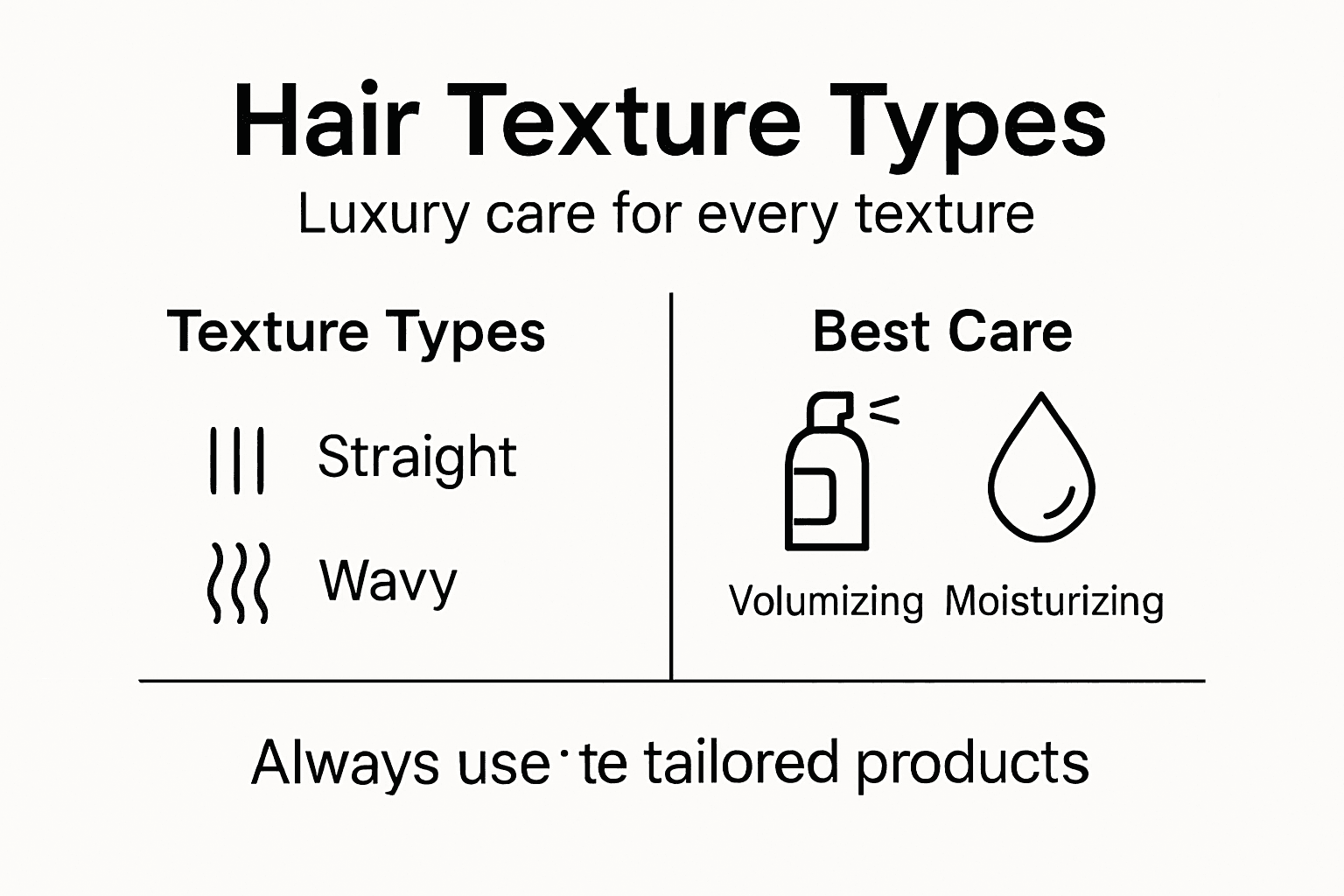
Your care routine should address the specific vulnerabilities of your texture. Type 1 straight hair benefits from texturizing products that add grip and movement, since these strands naturally want to lie flat. Type 2 wavy hair often needs products that enhance wave definition without creating frizz, plus techniques that encourage the natural wave pattern. Type 3 curly hair thrives with curl-defining products, moisture-rich conditioners, and styling methods that protect curl pattern integrity. Type 4 coily and kinky hair requires intensive moisture, protective styling, and products formulated to maintain moisture and repair damage while respecting the unique structural characteristics of tightly coiled strands. Beyond type, your strand diameter and porosity determine product weight and application frequency. Fine, high-porosity hair might need lightweight leave-in conditioners applied weekly, while coarse, low-porosity hair needs heavier creams applied less frequently but with longer processing time. At a luxury salon like Joel C Ma Hair Studio, your stylist doesn’t just recommend products generically. They identify your specific texture combination and recommend formulations, cutting techniques, and maintenance schedules tailored to your hair’s actual biology.
The transformation happens when you stop using products marketed to a general category and start using formulations designed for your specific combination of texture, strand diameter, and porosity. Someone with Type 2B wavy hair and fine strands needs completely different products than someone with Type 2B wavy hair and coarse strands, even though they technically have the same texture type. Your cutting schedule also depends on texture: fine hair might need trims every four to five weeks to prevent breakage and maintain shape, while coarse hair might maintain a cut for six to eight weeks. Color maintenance differs too. Fine hair might show new growth at three to four weeks because the overall volume is lower and changes appear more obvious, while coarse hair might go five to six weeks before touch-ups become necessary. Professional consultations that assess your complete texture profile mean you’re not guessing about product choices or maintenance timing. You’re following a personalized protocol designed around your hair’s actual needs, which is the definition of luxury hair care.
Pro tip: Keep a three-week hair journal documenting how your current products perform, which styles hold longest, and when your hair needs washing, then bring these notes to your consultation so your stylist can identify patterns and recommend adjustments.
Common Mistakes and Salon Solutions
Most hair damage doesn’t come from genetics or texture type. It comes from what you do to your hair every single day. Common hair care mistakes include overwashing, using harsh shampoos with sulfates and parabens, neglecting scalp care, and rough handling especially when hair is wet. These aren’t minor issues. Overwashing strips your hair of natural oils that protect strands and keep them hydrated, which then forces you to use more products to compensate, creating a destructive cycle. Women in La Jolla often shower daily or multiple times weekly, then wonder why their hair feels dry and damaged despite spending money on luxury products. Harsh shampoos with sulfates create that squeaky clean feeling that feels productive but actually damages the hair’s protective cuticle layer. Your scalp isn’t just skin to ignore. It’s the foundation of healthy hair growth, and neglecting scalp care means your new growth emerges weaker and more prone to breakage. How you handle wet hair matters too. Wet strands are most vulnerable to breakage, yet most people roughly towel dry, brush aggressively, and style wet hair without thinking about the consequences.
Salon professionals address these mistakes through education and customized protocols. Your stylist at Joel C Ma Hair Studio will assess your specific texture and recommend a personalized washing frequency that’s far less than what most people assume is necessary. Someone with fine, straight hair might benefit from washing twice weekly, while someone with coily, coarse hair might only need to wash once weekly or even every ten days. This alone transforms hair health because you’re not stripping oils constantly. Product recommendations shift too. Instead of reaching for whatever sulfate-heavy shampoo is on sale, your stylist suggests formulations specifically designed for your texture type that cleanse without destroying. Scalp care becomes part of your routine through professional treatments and at-home protocols that address your specific scalp condition, whether that’s oiliness, dryness, sensitivity, or a combination. Handling techniques change as well. You learn to detangle gently with a wide-tooth comb before washing, to wrap hair in a microfiber towel instead of rubbing, and to apply styling heat only to dry hair when absolutely necessary. These behavioral changes cost nothing but produce dramatic results.
One of the biggest mistakes happens after a disappointing salon experience. Women assume they’re stuck with a bad result, when actually fixing an unsuccessful haircut requires understanding which techniques can reshape and refine your current length rather than starting completely over. Similarly, color mistakes feel permanent until you understand that professional color correction strategies can address everything from unwanted tones to uneven results. The real solution isn’t accepting damage or assuming you need to grow everything out. It’s returning to a skilled stylist who understands how to work with your specific texture and assess what’s actually fixable versus what requires recovery time. Another critical mistake is continuing tight hairstyles that cause breakage and traction alopecia, a form of hair loss caused by consistent pulling. Your salon professional recommends protective styling that looks beautiful while actually protecting your strands from tension and damage. The transformation comes when you stop fighting your texture and stop making mistakes that compromise it, instead following a personalized protocol designed around your hair’s actual biology and vulnerability profile.
Pro tip: Start a two-week experiment washing your hair one less time than you currently do each week, paying attention to how your hair feels and looks by day four and five, then discuss results with your stylist to find your optimal washing frequency.
Elevate Your Hair Care by Embracing Your Unique Texture
Understanding your hair texture is the key to unlocking its full potential. Too often, generic advice or one-size-fits-all products lead to frustration with volume, frizz, or damage. Whether you have fine Type 3A curls or thick Type 4C coils, your hair deserves personalized care that respects its natural structure, strand diameter, and porosity. This article highlights how important texture-aware techniques and products are for achieving vibrant, healthy hair.
Experience the difference at Joel C Ma Hair Studio. Our expert stylists in La Jolla specialize in tailored services that amplify your individual hair profile — combining artistic haircuts, precision color treatments like balayage, and advanced styling methods designed specifically for your texture type. Do not settle for generic routines that weigh your hair down or dry it out. Book a consultation today to discover your perfect luxury hair care plan and unlock confidence in every strand.
Frequently Asked Questions
What are the main types of hair texture?
Hair texture is categorized into four primary types: straight, wavy, curly, and coily/kinky. Each type is further divided into subtypes based on curl tightness and strand structure, such as Type 1 for straight hair and Type 4 for coily hair.
How can I determine my hair’s strand diameter and porosity?
You can assess your strand diameter by pulling out a few hair strands from different areas of your scalp and comparing their thickness. For porosity, perform a simple water test by placing a single hair strand in water; if it sinks, you have high porosity, and if it floats, you have low porosity.
What products should I use for fine hair versus coarse hair?
Fine hair benefits from lightweight, volumizing products that won’t weigh it down, whereas coarse hair requires richer, more hydrating formulations to effectively penetrate and moisturize the thicker strands.
How often should I get my hair trimmed based on my texture type?
The trimming frequency varies by hair texture; fine hair typically requires trims every four to five weeks to prevent breakage, while coarse hair can go six to eight weeks between cuts, depending on its unique needs.
Recommended
- Why Luxury Haircare Products Elevate Your Style – Joel C Ma Hair Studio
- Role of Hair Texture – Elevating Luxury Styling Results – Joel C Ma Hair Studio
- Luxury Salon Experience: Elevating Personalized Beauty – Joel C Ma Hair Studio
- Luxury Hair Salons: How to Find the One That Suits You Best
- How to Identify Your Natural Hair Type: A Comprehensive Guide | MyHair