
Role of Hair Texture – Elevating Luxury Styling Results
Over 40 percent of American women are dissatisfied with their natural hair texture. For fashion-forward women in La Jolla, mastering texture is central to unlocking truly personalized luxury hairstyles and color treatments. By understanding the science behind hair’s unique structure and how it impacts styling and product choices, you gain the expert edge needed for standout results and healthy, radiant hair.
Table of Contents
- Definition of Hair Texture and Its Importance
- Types of Hair Texture and Key Distinctions
- How Texture Influences Styling Techniques
- Product Selection Based on Hair Texture
- Risks and Missteps in Texture Management
Key Takeaways
| Point | Details |
|---|---|
| Importance of Understanding Hair Texture | Hair texture is a critical biological trait that affects how hair behaves and responds to styling. Knowledge of texture allows stylists to create customized hair care strategies. |
| Types of Hair Texture | Hair is primarily classified into four types: Straight, Wavy, Curly, and Coily, each with unique characteristics requiring specific styling techniques. |
| Tailored Product Selection | Selecting the right hair care products is essential for managing different textures, considering factors like porosity and moisture needs for optimal results. |
| Risks in Texture Management | Improper handling can damage hair health; therefore, understanding individual hair characteristics helps prevent issues like breakage and loss of curl definition. |
Definition of Hair Texture and Its Importance
Hair texture represents a complex biological trait defined by the intricate morphological characteristics of individual hair strands. Characterized by genetic molecular factors, hair texture determines how hair naturally appears, behaves, and responds to styling techniques. Professional stylists recognize that understanding this fundamental attribute is critical for creating personalized hair design strategies.
At its core, hair texture encompasses multiple key characteristics including curl pattern, strand thickness, and overall structural composition. The genetic determinants of hair texture play a crucial role in defining individual hair properties, influencing everything from hair volume to styling potential. These inherent qualities impact how hair interacts with environmental conditions, chemical treatments, and styling tools.
Hair texture variations are remarkably diverse, ranging from ultra-fine and straight to densely coiled and voluminous. Each texture type presents unique challenges and opportunities for styling, requiring specialized approaches to maintenance, coloration, and aesthetic manipulation. Understanding these nuanced differences allows hair professionals to develop targeted strategies that enhance natural hair characteristics while achieving desired aesthetic outcomes.
Pro tip: Schedule a professional hair texture consultation to identify your specific hair type and develop a customized care strategy that maximizes your hair’s natural potential.
Types of Hair Texture and Key Distinctions
Hair texture classifications represent a complex spectrum of characteristics that extend far beyond simple categorization. Geographic and racial origins significantly influence hair structural properties, with distinct variations observed across different population groups. Understanding these nuanced differences is crucial for developing tailored hair care and styling approaches that respect individual genetic traits.
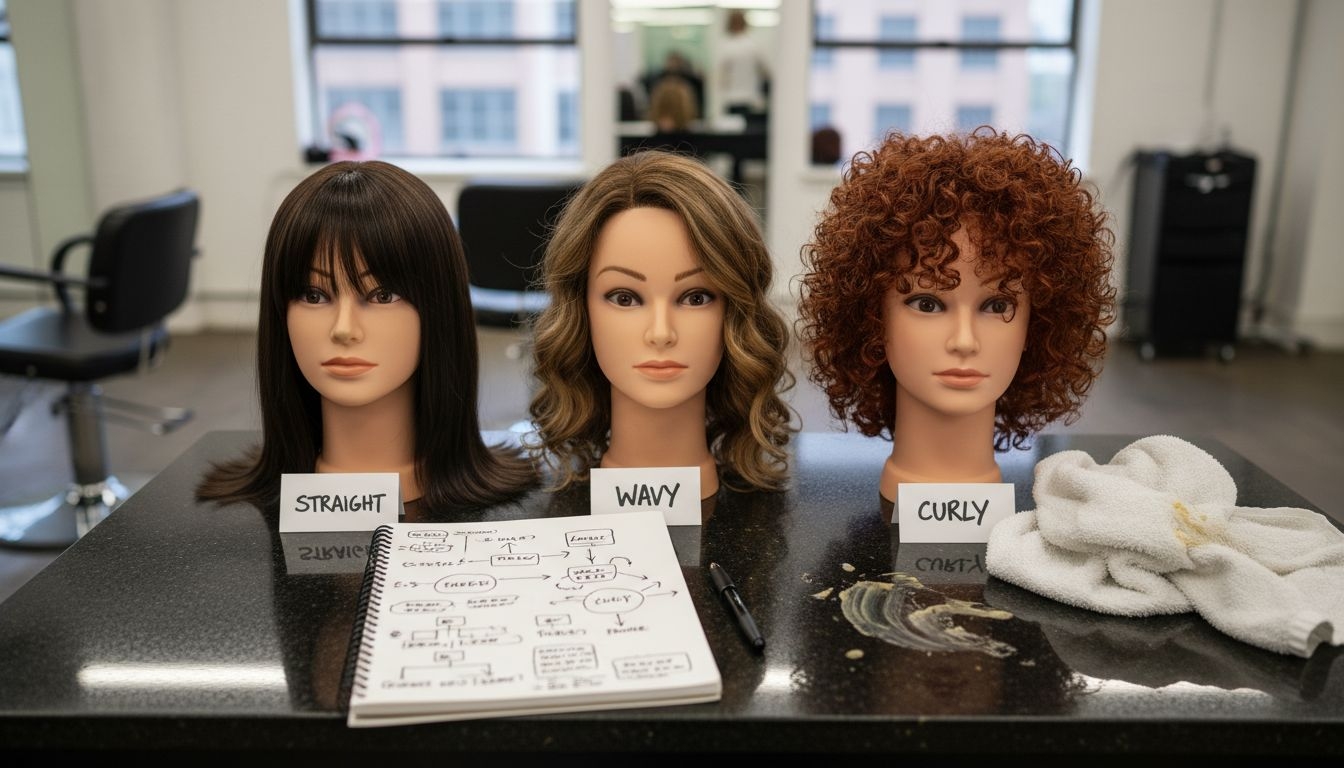
The primary hair texture types are traditionally categorized into three fundamental groups: Type 1 (Straight), Type 2 (Wavy), Type 3 (Curly), and Type 4 (Coily). Each category demonstrates unique structural characteristics that influence hair behavior, moisture retention, and styling potential. Type 1 hair features completely straight strands with minimal curl pattern, while Type 4 hair presents tight, intricate curl configurations with significant volume and complexity.
Beyond these basic classifications, hair texture is further distinguished by strand thickness, which ranges from fine to coarse. These variations impact everything from hair volume to how individual strands respond to styling techniques, chemical treatments, and environmental conditions. Professional stylists recognize that understanding these subtle differences allows for more precise and personalized hair design strategies that enhance natural hair characteristics.
Here’s a comparative overview of the four primary hair texture types:
| Hair Texture Type | Typical Structure | Moisture Needs | Common Styling Challenge |
|---|---|---|---|
| Straight (Type 1) | Smooth, flat strands | Low to moderate | Lack of volume |
| Wavy (Type 2) | Subtle S-shaped pattern | Moderate | Frizz control |
| Curly (Type 3) | Defined curls, springy | High | Curl definition maintenance |
| Coily (Type 4) | Tight, dense coils | Very high | Breakage prevention |
Pro tip: Invest in professional hair texture analysis to unlock personalized styling techniques that complement your unique hair structure and genetic profile.
How Texture Influences Styling Techniques
The intricate relationship between hair texture and styling techniques reveals a complex interplay of mechanical and structural considerations. Different hair textures demand specialized approaches that preserve the natural integrity of hair strands while achieving desired aesthetic outcomes. Professional stylists must carefully assess individual hair characteristics to develop targeted styling strategies that minimize damage and maximize hair health.
Each hair texture presents unique challenges in styling, requiring nuanced techniques tailored to specific structural properties. Curl pattern, strand thickness, and overall elasticity become critical factors in determining appropriate styling methods. Textured hair demands particularly careful treatment to prevent mechanical stress and maintain curl definition, with styling techniques needing to balance aesthetic goals against the potential risk of structural damage.
Styling techniques must integrate multiple considerations, including heat application, mechanical manipulation, and product selection. Coily and curly hair textures require gentler handling, with techniques that work with natural curl patterns rather than against them. Straight hair textures can withstand more aggressive styling approaches, but still benefit from techniques that preserve hair’s natural strength and minimize potential structural compromise.
Pro tip: Consult a professional stylist who specializes in your specific hair texture to develop a personalized styling approach that enhances your hair’s natural characteristics while minimizing potential damage.
Product Selection Based on Hair Texture
Understanding the molecular and genetic foundations of hair texture is crucial for selecting optimal hair care products. Different hair textures require specialized formulations that address unique structural characteristics, moisture requirements, and styling challenges. Professional stylists recognize that product selection is not a one-size-fits-all approach, but a nuanced process of matching specific hair needs with targeted solutions.
The primary considerations in product selection include hair porosity, moisture retention capacity, and structural elasticity. Specialized product formulations must account for how different hair textures respond to various active ingredients and mechanical treatments, with particular attention to minimizing potential damage and enhancing natural hair characteristics. Curly and coily hair textures typically require more moisturizing and protective products, while straight hair textures benefit from lighter, volume-enhancing formulations.
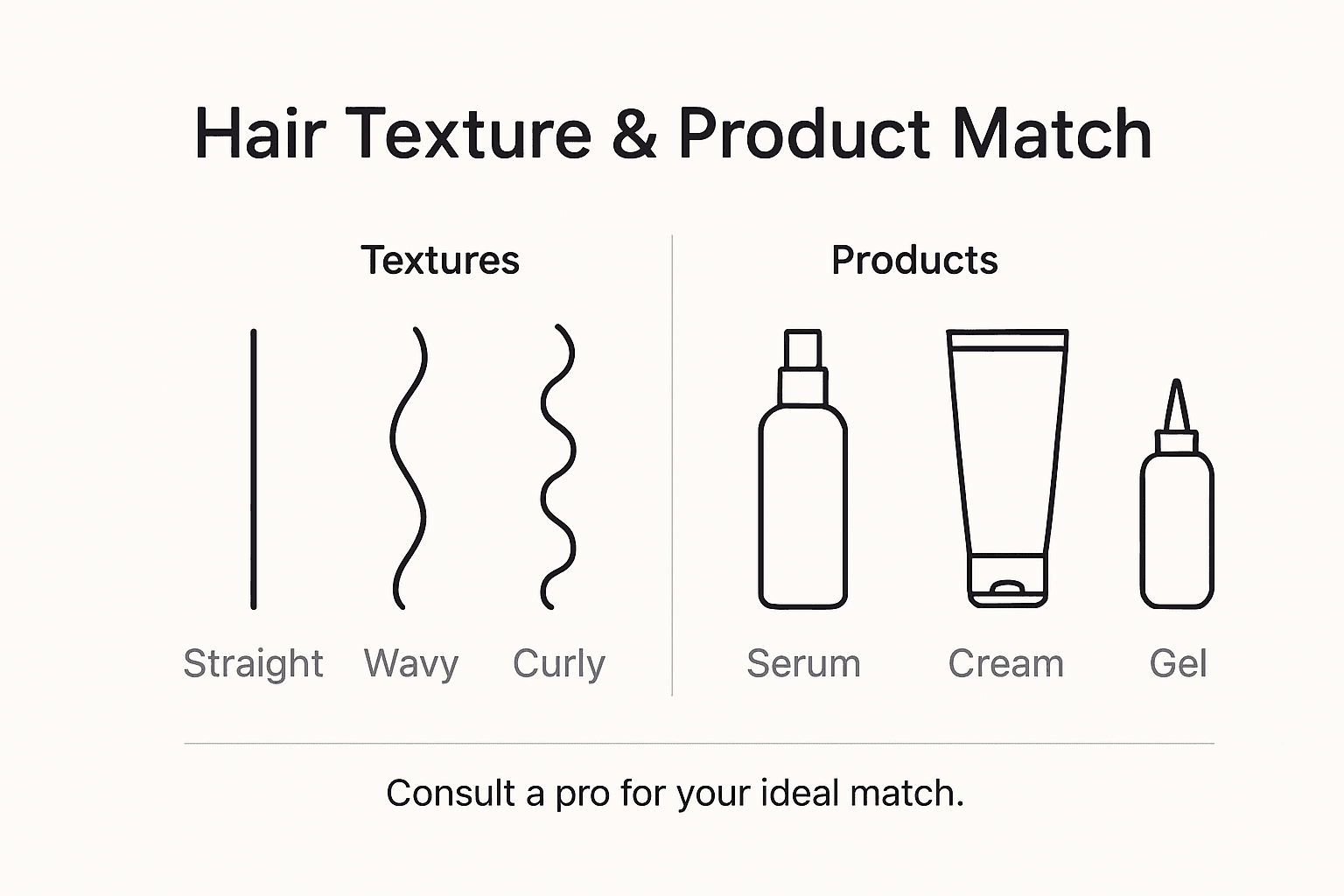
Product selection strategies involve comprehensive assessment of multiple hair attributes. Factors such as strand thickness, curl pattern, and environmental exposure play critical roles in determining the most appropriate hair care approach. Professionals recommend a multi-step approach that considers not just surface-level appearance, but the underlying structural integrity of hair strands across different texture types.
See how hair porosity interacts with texture to affect product selection:
| Hair Texture | Porosity Level | Best Product Type | Care Focus |
|---|---|---|---|
| Straight | Low to medium | Lightweight, volumizing | Balance oils |
| Wavy | Medium | Hydrating creams | Reduce frizz |
| Curly | High | Intense moisture, curl creams | Protect curl pattern |
| Coily | High | Heavy oils, butters | Hydration and strength |
Pro tip: Conduct a professional hair texture analysis to develop a customized product selection strategy that precisely matches your unique hair characteristics and styling requirements.
Risks and Missteps in Texture Management
Hair texture management involves complex challenges that can significantly impact hair health and appearance, demanding careful and informed approaches. Improper handling can lead to irreversible damage, compromising the natural integrity of hair strands. Professional stylists emphasize the critical importance of understanding individual hair characteristics and avoiding generic treatment strategies that may cause unintended structural harm.
The most prevalent risks in texture management include mechanical stress, chemical overprocessing, and inappropriate moisture balance. Frequent styling practices such as excessive heat application, aggressive brushing, and inappropriate product selection can progressively weaken hair fibers, leading to breakage, loss of natural curl pattern, and diminished overall hair health. Textured hair, particularly curly and coily types, demonstrates heightened vulnerability to these damaging interventions.
Mitigating risks requires a holistic approach that integrates scientific understanding with personalized care strategies. Professionals recommend comprehensive assessments that evaluate hair’s unique structural properties, porosity levels, and environmental interactions. Critical preventative measures include minimizing thermal stress, selecting texture-specific products, implementing protective styling techniques, and maintaining consistent hydration and nutritional support for hair fibers.
Pro tip: Schedule periodic professional consultations to develop a dynamic hair care strategy that adapts to your hair’s changing texture and environmental conditions.
Elevate Your Hair Texture Experience with Joel C Ma Hair Studio
Understanding your unique hair texture is essential for achieving luxurious, personalized styling results. Whether you struggle with curl definition maintenance, frizz control, or moisture balance, your hair deserves expert care tailored to its specific needs. At Joel C Ma Hair Studio, we specialize in creating customized haircare strategies that honor your natural texture while enhancing your individual style. Our team of skilled hair artists uses advanced techniques and over 25 years of experience to transform challenges like breakage prevention and volume control into stunning, healthy results.
Discover how professional texture analysis and personalized product selection can revolutionize your haircare routine. Don’t settle for generic solutions that overlook your hair’s unique structural properties. Experience the artistry and precision that set Joel C Ma Hair Studio apart in La Jolla.
Ready to unlock your hair’s true potential with expert guidance and luxurious styling?
Book your personalized consultation today at Joel C Ma Hair Studio and start your journey to healthier, more beautiful hair textured perfectly for you. Visit our services page to explore bespoke treatments and let us craft a look that highlights your natural beauty while maintaining your hair’s health.
Frequently Asked Questions
What is hair texture and why is it important?
Hair texture refers to the biological characteristics of individual hair strands, including curl pattern, strand thickness, and overall structure. Understanding hair texture is crucial for creating personalized styling strategies that enhance natural beauty and achieve desired results.
How can I determine my hair texture type?
To determine your hair texture type, consider factors such as the curl pattern (straight, wavy, curly, or coily), strand thickness (fine or coarse), and overall hair behavior. A professional hair texture consultation can provide accurate identification and personalized care recommendations.
What styling techniques work best for different hair textures?
Styling techniques should be tailored to specific hair textures. For example, coily and curly hair require gentler handling to maintain curl definition, while straight hair can withstand more aggressive styling. Always assess factors like moisture needs and elasticity to select the best approach.
How does hair texture affect product selection for hair care?
Hair texture significantly influences product selection. Curly and coily hair typically requires heavier moisturizing products, while straight hair benefits from lighter formulations. Analyzing hair porosity and structural characteristics can help you choose the most effective products for your needs.
Recommended
- Understanding What is Texturizing Hair for Fashion Styles – Joel C Ma Hair Studio
- What Is a Luxury Hair Studio? Comprehensive Overview – Joel C Ma Hair Studio
- Luxury Hair Salons: How to Find the One That Suits You Best
- Luxury Hair Salons: Everything You Need to Know – Joel C Ma Hair Studio
- Curare i Capelli Secchi e Sfibrati – Parrucchiere Organic Milano